Future Supply Systems

  • Future Supply Systems

    Driverless Trucks Are Here

    Future Supply Systems (FSS)

    The logistics sector is approaching a structural turning point. The conversation about autonomous freight has moved beyond speculation and into execution.

    For years, industry projections suggested that autonomous trucking could displace as much as half of human-driven long-haul capacity by 2027. At the time, those forecasts sounded aggressive to many operators. Today, when you look at the pace of technological deployment, regulatory testing corridors, and fleet-level pilot programs, those projections appear less like speculation and more like a realistic trajectory.

    Ten years ago, I authored a paper examining the strategic potential of autonomous freight systems. At that time, the concept sat on the edge of technological imagination. The sensors were improving, artificial intelligence was developing rapidly, and vehicle automation platforms were still being tested largely in controlled environments. The industry viewed it as an innovation story rather than an operational reality.

    Fast forward to today and the equation has changed.
    The hardware works.
    The software works.
    The sensor fusion systems work.
    The routing intelligence works.

    Autonomous freight platforms can now move goods across hundreds of miles with precision, consistency, and operational efficiency that rivals traditional human-driven systems in controlled lanes. Infrastructure corridors are being built specifically to support this technology. Logistics companies are testing driver-out models on fixed routes. Insurance frameworks and regulatory discussions are progressing. In short, the engineering barrier has largely been removed.

    The remaining constraint is no longer technological.
    It is human.

    Adoption curves in logistics have always been shaped by culture, economics, and leadership decisions. The industry must now answer a series of uncomfortable but necessary questions:

    • How do we integrate autonomous systems without destabilizing workforce ecosystems?

    • How do carriers transition operating models built around human driver capacity?

    • How do shippers redesign supply networks around 24/7 autonomous freight flows?

    • How do regulators, unions, and corporations align incentives around a technology that fundamentally changes labor dynamics?

    This is the real inflection point.
    Not technology.
    Not engineering.
    Leadership.

    The logistics industry is entering a phase where the organizations that adapt first will redefine cost structures, delivery speed, and supply network resilience for decades to come. Autonomous freight is not simply a trucking innovation. It is a supply chain architecture shift.

    Think about what a truly autonomous freight network enables:

    • Continuous 24-hour freight movement without driver rest constraints

    • Reduced accident exposure driven by machine precision

    • Lower long-term transportation costs

    • Predictable transit times with AI-managed routing

    • Supply chains designed around data rather than human availability

    Those changes do not just impact trucking. They ripple through warehousing, retail distribution, manufacturing timelines, and global trade logistics.

    The companies that prepare early will redesign their operating models around these advantages. The companies that wait will eventually be forced to react.
    That is where Future Supply Systems enters the conversation.

    Future Supply Systems exists at the intersection of operational readiness and human readiness. The technology is already here. What businesses need now is strategic alignment, transition planning, and leadership frameworks that help organizations integrate automation without losing operational stability.

    Our role is straightforward but critical:
    Translate innovation into executable logistics strategy.

    Bridge the gap between emerging technology and real-world operations.
    Prepare companies and institutions to operate inside the next generation of supply networks.

    Because the reality is simple.
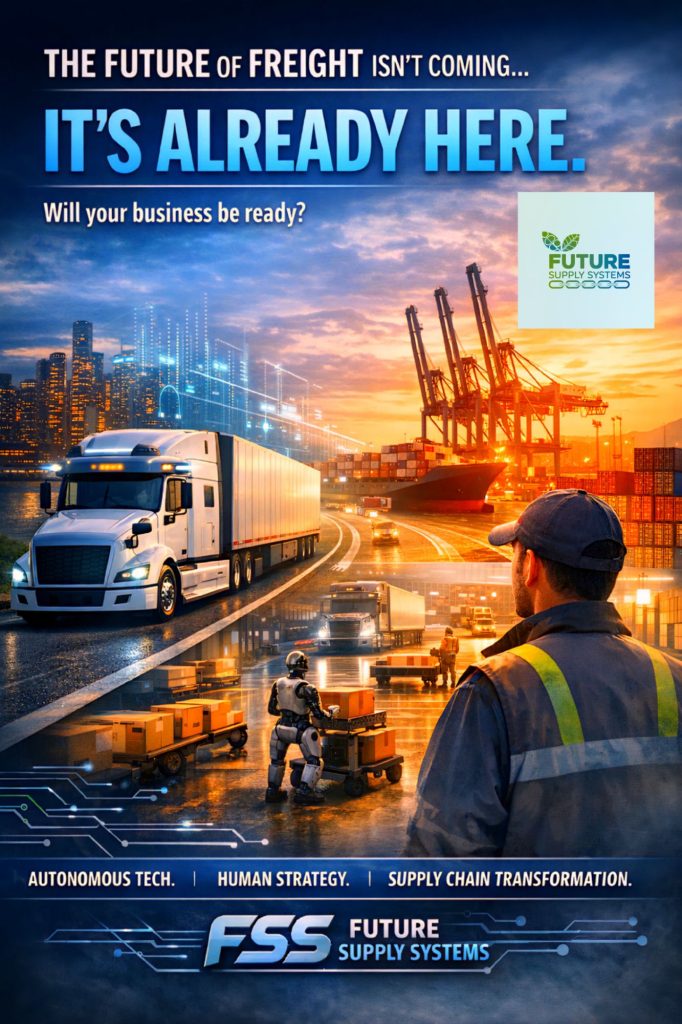
    The future of freight is not something that will arrive someday.
    It is already arriving.

    The question for the logistics industry is not whether autonomous freight will reshape supply chains.

    The question is who will be prepared when it does.
  • Future Supply Systems

    Are People Now the Bottleneck in the Modern Supply Chain?

    by Future Supply Systems (FSS) 12/27/2025

    For decades, the supply chain conversation has revolved around technology gaps. Legacy systems. Fragmented data. Manual processes. Limited visibility.
    That argument no longer holds.
    Today, the hard truth confronting logistics leaders, distributors, and operators is this:
    The bottleneck is no longer technology.
    The bottleneck is people.

    The New Reality: Human Friction, Not System Failure
    We are operating in an era where AI-driven routing, predictive analytics, automated sorting, real-time tracking, and machine learning optimization are not futuristic concepts—they are commercially available, deployable, and proven.
    Yet stoppages continue. Delays persist. Packages go missing. Last-mile failures are accelerating. Customer trust is eroding.

    Why?

    Because human behavior is now the dominant choke point in an otherwise optimized system.
    What we are seeing across the supply chain is not a lack of capability—but a failure of execution caused by human friction:
    • Negligence instead of precision
    • Inaccuracy instead of accountability
    • Resistance instead of adoption
    • Manual overrides instead of automation trust

    The system is ready.
    The people often are not.

    Two Choke Points. Same Root Cause.

    Here at Future Supply Systems, we see the same pattern emerging at both ends of distribution:
    1. Supply-Side Breakdown
    Inventory miscounts. Poor scanning discipline. Improper handling. Missed handoffs. Data entry errors.
    These are not system limitations—they are human failures within system workflows.

    2. Last-Mile Collapse
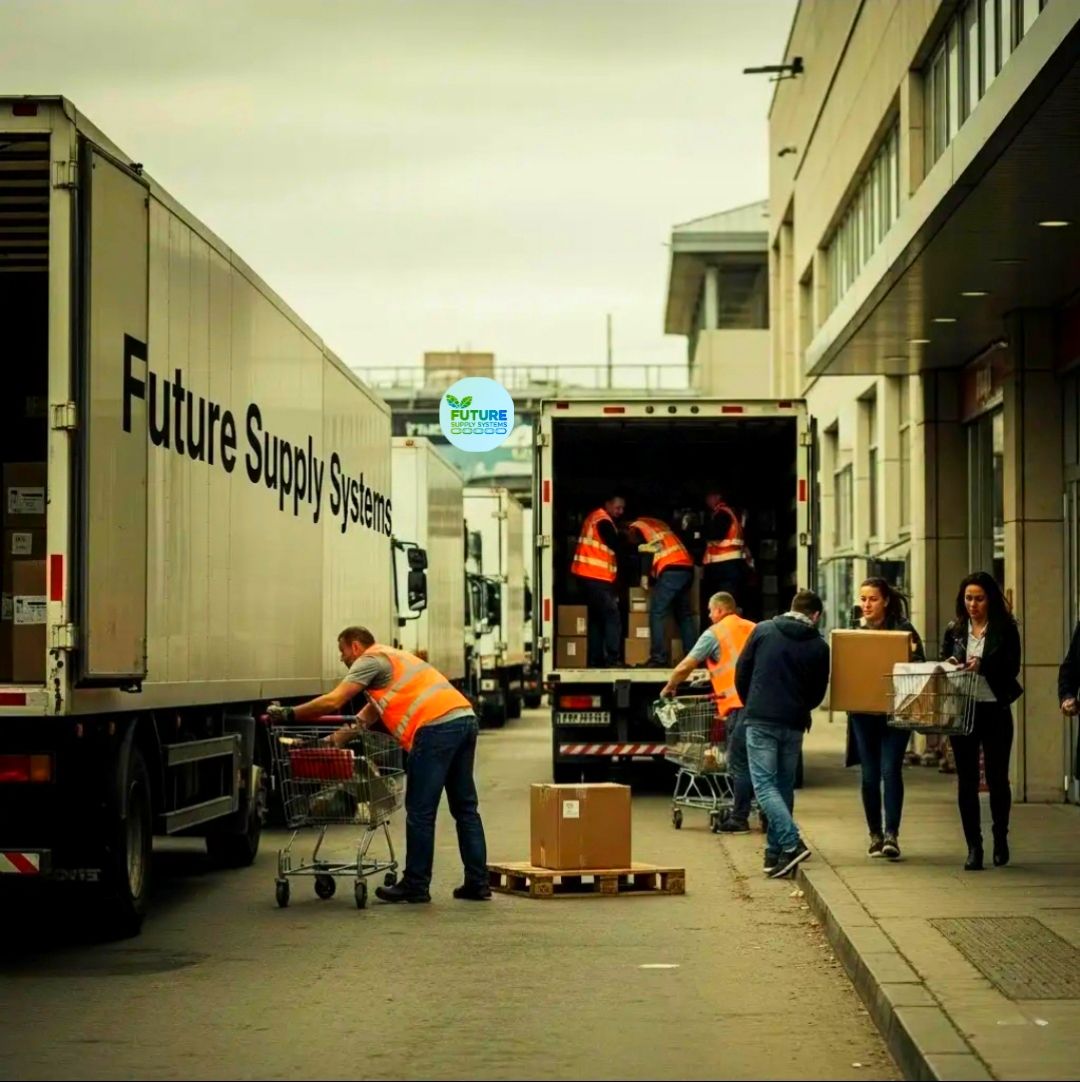
    Delayed deliveries. Misdirected packages. Damaged goods. “Lost” shipments that were never actually lost—just mishandled.
    The last mile is no longer a technology problem.
    It is an execution discipline problem.
    And the cost is measurable:
    • Higher operational expenses
    • SLA violations
    • Customer churn
    • Brand erosion
    • Regulatory exposure

    AI Is Ready. The Question Is: Are We?
    Here’s the uncomfortable question few want to ask:

    Are humans now getting in front of the very technology designed to make supply chains faster, smoother, and more resilient?
    AI doesn’t forget to scan a package.
    Automation doesn’t misroute out of habit.
    Algorithms don’t call off accountability.
    Yet organizations continue to force advanced systems to operate at the speed and accuracy of their least disciplined human node.

    That mismatch is fatal.

    This Is Not an Anti-Human Argument. It’s a Pro-Accountability One.

    Let’s be clear: this is not about eliminating people.

    It’s about redefining their role.
    In the modern supply chain:
    • Humans should supervise systems, not override them
    • Judgment should complement automation, not contradict it
    • Training must be continuous, not optional
    • Accountability must be enforced, not assumed

    When human engagement becomes inefficient, inaccurate, or negligent, it doesn’t just slow the chain—it breaks it.

    The Strategic Imperative
    We are officially at a moment where the greatest risk to supply chain performance is not disruption from outside forces, but friction from within.
    The organizations that will win are those that:
    • Reduce unnecessary human touchpoints
    • Enforce process discipline relentlessly
    • Align incentives with precision and accountability
    • Let AI and automation do what they do best—without interference

    The ones that don’t will continue blaming “logistics challenges” while bleeding margin and credibility.

    Final Question for Industry Leaders
    So we ask the question directly—and unapologetically:

    Are humans now the primary blockage in supply chain and logistics performance?

    If the answer makes you uncomfortable, good.

    Discomfort is often the first signal that transformation is overdue.

    Within Future Supply Systems, we don’t debate whether change is coming.
    We help organizations decide whether they will lead it—or be slowed by it.

  • Future Supply Systems

    The Future is Now: Revolutionizing Supply Chains for Unmatched Resilience

    The Future is Now: Revolutionizing Supply Chains for Unmatched Resilience

    The supply chain landscape is no longer just evolving—it’s transforming at lightning speed. Businesses that want to stay ahead must move beyond traditional logistics and embrace next-generation solutions that redefine efficiency, security, and adaptability.

    Through Future Supply Systems, we’re not just keeping pace with change—we’re driving it. By integrating digital twins, autonomous mobile robots (AMRs), blockchain security, and AI-driven demand forecasting, we empower businesses to create supply chains that are smarter, faster, and future-proof.

    Imagine real-time simulations that predict disruptions before they happen. Warehouses that optimize themselves. Seamless transactions powered by blockchain’s unbreakable security. AI models that anticipate demand shifts with pinpoint accuracy. This isn’t the future—it’s happening now, and we’re leading the way.

    The path forward isn’t about reacting—it’s about anticipating, innovating, and staying three steps ahead. Partner with us to unlock new efficiencies, make data-driven decisions with confidence, and build a supply chain designed not just to survive, but to thrive in the digital age.

      Discover the future of supply chain innovation today: Future Supply Systems

    The Future is Now
  • Future Supply Systems

    Expert Progression in Supply Chain Management

    Our foundation in logistics was built through hands-on experience:
    – Early Logistics Foundations (1985-2001): Developed route optimization skills through newspaper delivery, mastered large item logistics in furniture delivery, and built expertise in supply chain security while working in freight yard access control. Simultaneously refined last-mile delivery efficiency as a pizza delivery driver.

    – Operations Leadership (2001-2015): Managed high-volume inventory and complex supply chains as a General Manager overseeing multi-location operations with $8M+ revenue. Later transitioned to dock/facility management for turf supplies, handling millions of tons of palletized products across multiple warehouses.

    – Advanced Logistics & Entrepreneurship (2015-Present): Coordinated large-scale national logistics as an Operations Manager for household relocations before founding two successful businesses: Food By The Word LLC, a food service logistics company, and Montgomery 2320 Business Development Services LLC, which provides supply chain efficiency consulting.